
War Paint
A Not Sure piece to accompany Alan Watt Redux 246 - "Times and Portents to Conjure Terror" - Jan. 18, 2026

Alan Watt Redux 246 - “Times and Portents to Conjure Terror”
“Bathe now in the stream before you,
Wash the war-paint from your faces,
Wash the blood-stains from your fingers,
Bury your war-clubs and your weapons,
Break the red stone from this quarry,
Mould and make it into Peace-Pipes,
Take the reeds that grow beside you,
Deck them with your brightest feathers,
Smoke the calumet together,
And as brothers live henceforward!”
The Song of Hiawatha, I. The Peace Pipe
— Henry Wadsworth Longfellow
There is a long history of Native Americans applying paint to their faces and bodies before going into battle. They did this for several possible reasons including camouflage, to strike fear into their enemies, and to provide the wearer with supernatural powers. Different colors had different meanings. Red symbolized blood and war, but also strength and energy. Indian braves might wear red made from clay, while yellow paint would be reserved for the chief, and would symbolize bravery, and the willingness to finish the battle. Prepared to die.
As with Scottish tartans, some patterns were reserved for specific individuals, families, and clans. In the Great Sioux Nation, yellow represented the sacred and was associated with the warrior’s strength, intelligence, and strong heart. The red ochre made from clay was mixed with animal fat and plant binders and it has been suggested that the Beothuk of present-day Canada used this to cover their entire bodies, as it possibly had some kind of insect repellent quality. I’ve struggled to survive summer in Canada where mosquitoes are the size of small birds. Had I known of the repellent qualities of ‘redskin’ I would have happily applied this war paint head to toe.
Red signifies fighting prowess and hunting success. To the Seminole, it symbolized an irrevocable oath of war. To the Lakota Sioux, it symbolized perseverance, purity, passion, and wisdom. Black symbolized strength, victory, and power, and to the Sioux, it was associated with the Wakíŋyaŋ, a thunder being.
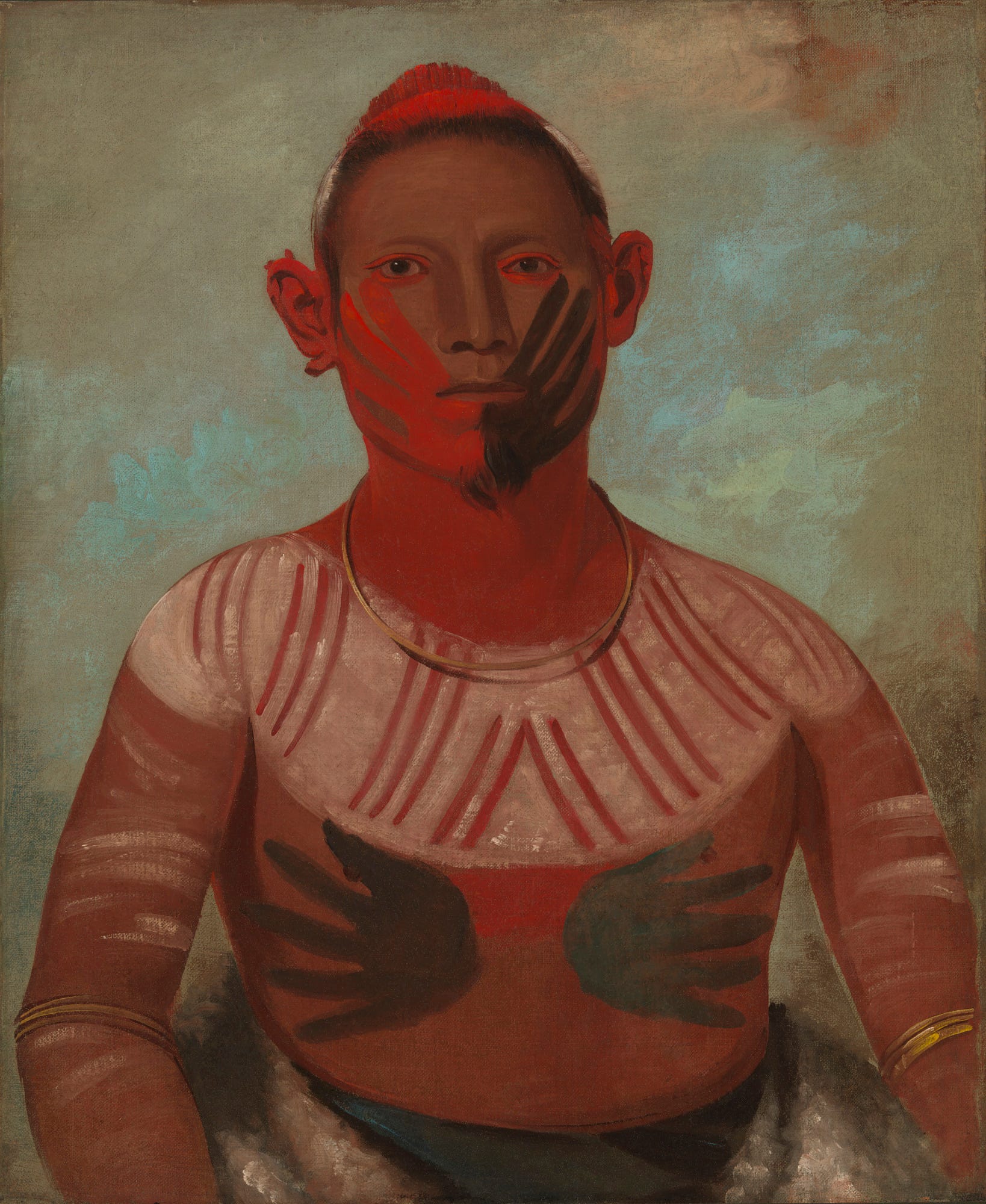
George Catlin, I-o-wáy, One of Black Hawk’s Principal Warriors, 1832, oil on canvas, 29 x 24 in. (73.7 x 60.9 cm), Smithsonian American Art Museum, Gift of Mrs. Joseph Harrison, Jr., 1985.66.12
The Picts of Scotland were a group of ancient people that lived in the northern and eastern part of Scotland from the 3rd to the 9th century AD. The Romans described them with the word picti which meant ‘painted ones’ in Latin. Historical writing sometimes refer to this body ornamentation as a tattoo, but experiments have shown that the woad dye lasts only a week or two before it becomes so faded that it almost disappears. I haven’t tried this at home, but I’ve read that anyone injected with woad paste or powder becomes very ill, so perhaps ‘painted ones’ is exactly what they were.
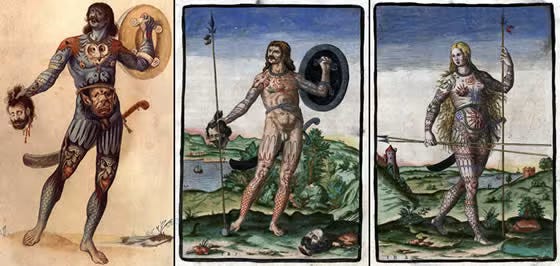
Elsewhere, Tartan Tinker has written about the Picts. Perhaps he will write a post for us about some of his research.
Tattooed war paint would take us to Africa and beyond where tattoos have been deeply significant and symbolize spiritual protection and a spiritual shield during warfare, and have been used for tribal identification and intimidation. Interesting, but beyond the scope of my piece.
It seems that ‘war paint’ entered into English in 1826 from writers such as James Fenimore Cooper (The Last of the Mohicans) and Henry Wadsworth Longfellow (The Song of Hiawatha) who used the term to describe Native American Indians preparing to go into battle, but when did the term get applied to women and their use of makeup? It would appear that shortly after the term was used by those writers, it was applied to women figuratively; putting on their best clothes, preparing for a social event.
About twenty years ago, a friend gave me book she had just read entitled War Paint: Madame Helena Rubinstein and Miss Elizabeth Arden: Their Lives, Their Times, Their Rivalry. I recall that it was a fascinating look at two early twentieth century entrepreneurial women who built cosmetic empires. Helena Rubinstein was a Polish Jew (b. 1872) who emigrated from Poland to Australia, then to London where she married a Polish-born American journalist. They left London for Paris and she became famous for her intellectual salons which her husband publicized. It was claimed by them that her husband, Edward William Titus, published (in France) Lady Chatterley’s Lover by D. H. Lawrence, which would face obscenity charges and would not be published in the U.S. until 1960, but the book was first released in 1928, and Titus and Rubinstein left Paris at the start of WWI, so this boast is questionable.
It is, however, the kind of shocking claim they enjoyed making. One anecdote had a French ambassador at her party who drunkenly said to Edith Sitwell, Vos ancêtres ont brûlé Jeanne d'Arc! Rubenstein, who knew very little French asked for that to be translated. “Your ancestors burned Joan of Arc!” to which she replied, “Well, somebody had to do it.”
Helena Rubenstein opened a cosmetics salon in New York City in 1915 and from there developed her famous ‘Day of Beauty’ treatments.
Meanwhile, Elizabeth Arden was born in Woodbridge, Ontario, Canada in 1881 to a Scottish father and a Cornish mother. A wealthy Cornish aunt paid for her education but she dropped out of nursing school and met up with her brother who was living in Manhattan. There she studied skin care, traveled to Paris to learn facial massage techniques and opened up her Red Door Salon in 1910.
Both women were keenly aware of the association of cosmetics with the lower classes, actresses, and prostitutes. Both pursued the pseudoscience of skin care, positioning their services as something closer to a health service, slowly adding luxury packaging, and muted color palettes. The extremely high prices of their products also served to separate their products from the ‘cheap’ and ‘tawdry’ lipsticks of the working girls.
What follows in the book (which I’ve not read in twenty years, and no longer own) is the story of an intense and at sometimes bitter rivalry between these two women, both of whom were ambitious business women and social climbers. Helena put much of her riches into collecting African and fine art and furniture. Elizabeth collected and raised Thoroughbred horses.
In 2007, a documentary film (The Powder & the Glory) was made about this rivalry and in 2016, a Broadway musical premiered entitled War Paint.
Alan Watt has said that we become enslaved by wanting things that we do not need. I think that makeup must certainly fit that description. Kohl for lining eyes and brows, red ochre for lips, and green antimony for eye shadow have historically been for high-born women (and men). Pale skin has usually been a sign of the leisure classes for only peasants in the field burned their skin to fade to brown over time. Chinese women used rice powder to achieve a pale complexion. Roman women used toxic white lead (ceruse) which could lead to paralysis and death. Women in the Middle Ages used egg white and lead-based powder. The Greeks preferred a more natural look, with no coloring on the face and a bit of crushed berries on the lips.
Styles vary from location to location, but henna is still in favor for hair and body decorations in India and parts of the Middle East, dating back to ancient Babylon and Egypt. Elaborate henna tattoos (Mehndi) which wear off and wash away are part of traditional Indian weddings, signifying prosperity and good fortune for the bride.
Ancient Egyptians used much makeup but it appears the application was for religious and high-born social application. It was used during periods of Roman history but frowned upon by some philosophers and the Stoics who saw it as deceptive and associated with prostitution. Seneca praised his mother for never defiling her face with paints or cosmetics. The Christian Bible disapproves of the use of makeup when it is used to deceive, to mislead or manipulate, or as a vain effort to hide inner corruption. Queen Jezebel painted her eyes to seduce and manipulate Jehu. Pre-1917 Russia prohibited the use of makeup and it was only used by prostitutes and actresses. It was considered vulgar to wear makeup in Victorian England.
I have read about a 1916 ad that Helena Rubenstein ran, but I cannot find it:
"Is yours a 'war' face? Even if your social or professional life does not demand it, your patriotism demands that you keep your face bright and attractive."
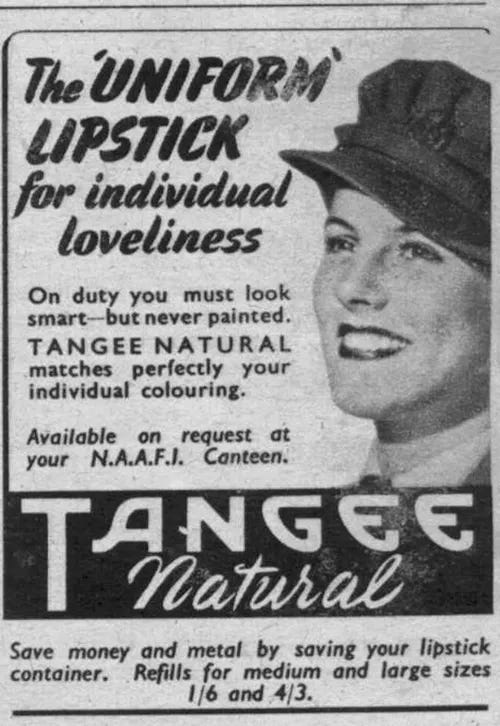
I did find this ad of hers from the Second World War:
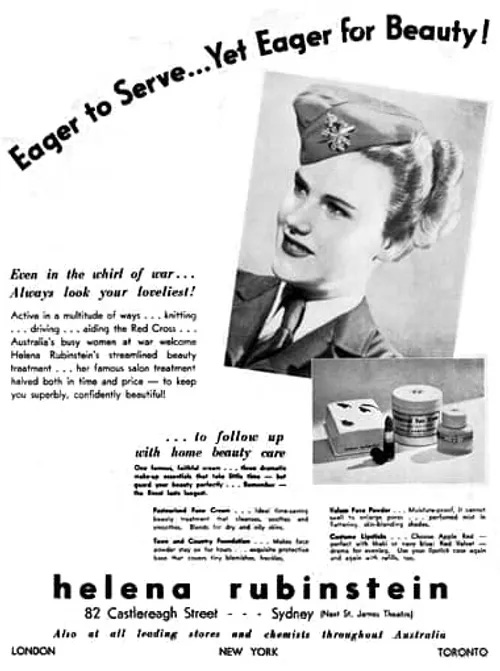
Elizabeth Arden was no stranger to wartime marketing either. She turned makeup into a symbol of patriotic duty during World War II, and in 1941, she was commissioned by the U.S. Marine Corps Women’s Reserve to create a custom cosmetic kit that matched the red piping on their uniforms. The result was Montezuma Red, a vibrant red lipstick, paired with matching cream rouge and nail polish, issued as part of an official military kit.
The wartime message became “beauty is your duty.” In the UK, Churchill’s government used this slogan and many companies used variants of it in their marketing campaigns.
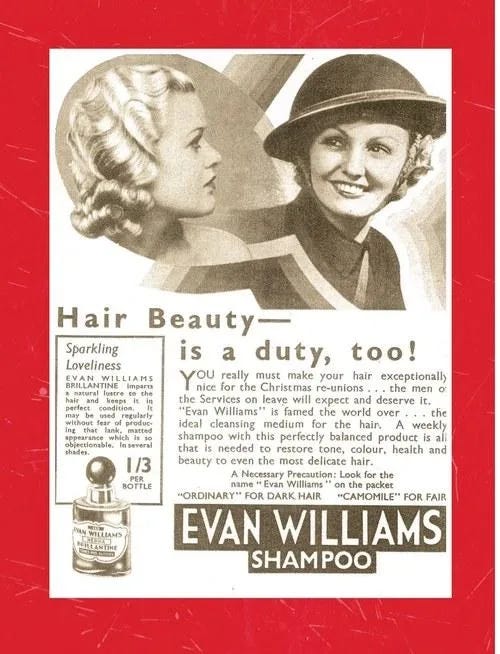
Women were encouraged to maintain their appearance as an act of patriotism and morale-boosting. Wearing red lipstick was seen as a defiant symbol of femininity, confidence, and the “free society worth defending” especially since Hitler disdained “made-up” women.
Elizabeth Arden released Victory Red for civilian women in 1941, with the tagline “Keep ’em flying!”—further embedding red lipstick into the cultural fabric of the war effort. Even when supplies were rationed, women were urged to use their makeup wisely. Maintaining one’s beauty routines became a form of emotional resilience and a sign of national unity.
Estée Lauder was born in New York City in 1908 to Hungarian Jewish immigrants. She worked in her parents’ hardware store, and later she learned the beauty business by working for her uncle who was a chemist who made and sold creams, lotions, rouges, and perfumes. She married Joseph Lauder in 1930, had a son named Leonard in 1933, divorced her husband in 1939, remarried him in 1942, and had a second son named Ronald in 1944.
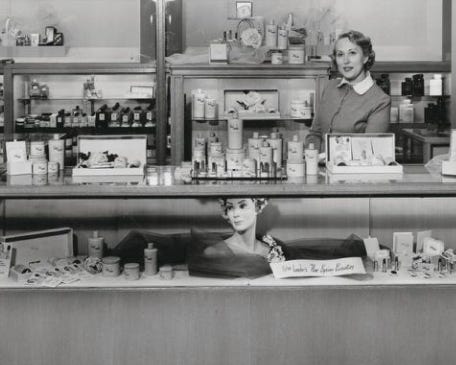
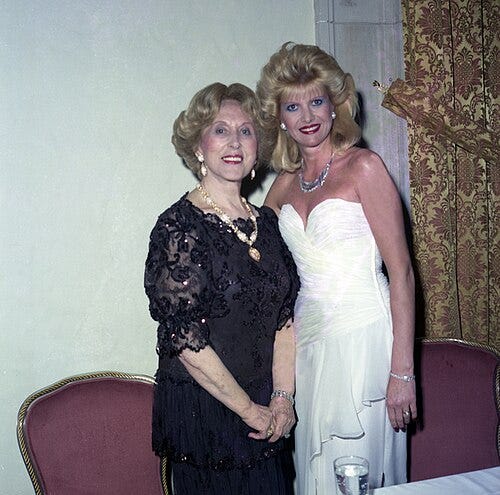
Here is Mrs. Lauder with the first Mrs. Donald Trump in 1986:
Estée Lauder passed away in 2004, leaving her sons Leonard and Ronald as the sole heirs to The Estée Lauder Companies cosmetic fortune. Leonard was the CEO until 1999 and after that he served as chairman emeritus. In 2013, Leonard promised his collection of Cubist art (Picasso, Léger, Braque, Gris) to the Metropolitan Museum of Art, a collection valued at over $1 billion. When Leonard died in June 2025, his estate was worth nearly $10 billion.
Leonard Lauder was a member of the Council on Foreign Affairs. He was a trustee of the Aspen Institute and the chairman of The Aspen Institute International Committee. His son William is chairman of The Estée Lauder Companies. His son Gary has been involved with the Aspen Institute since 1992 as a member and corporate officer. He is a founding member of the Henry Crown Fellowship Program (developing community-spirited, entrepreneurial leaders), part of the inaugural class in 1997, and he serves on the Advisory Council of the Aspen Institute Science & Society Program. He co-created the Socrates Society at the Aspen Institute with his wife, Laura Lauder, in 1996, which was formed to encourage dialogue among young leaders on technology and democracy.
Ronald Lauder is the second son of Estée and Joseph Lauder. He started to work for the Estée Lauder Company in 1964 as head of the international department which evidently qualified him to become Deputy Assistant Secretary of Defense for European and NATO policy at the United States Department of Defense in the Ronald Reagan administration.
Ronald is a vocal supporter of the Likud party, and a long-time friend and supporter of Benjamin Netanyahu. He has also been friends with Donald Trump for many years. The list of organizations that Lauder has been associated with over the years is lengthy and includes the Conference of Presidents of Major American Jewish Organizations, the Jewish National Fund, the World Jewish Congress, the American Jewish Joint Distribution Committee, the Anti-Defamation League, the Jewish Theological Seminary, Rabbinical College of America, Brandeis University, and the Abraham Fund. (Source, Wikipedia)
Currently, Ronald is the President of the World Jewish Congress, an international federation of Jewish communities and organizations. The WJC’s initial purpose was to defend the rights of Jews in the Diaspora, but it was always a strong supporter of the aims of Zionism. Ronald has been president of of the WJC since 2007, taking over the role from Edgar Bronfman, son of the bootlegging rum-runner Sam Bronfman (Distillers Corporation Limited, Seagram Company). Alan Watt talked about Sam Bronfman quite a few times in regards to Prohibition and politics. He was the Canadian counterpart to Joseph Kennedy during Prohibition. That’s a different story, though coincidentally makeup became a powerful symbol of women’s liberation and modernity during the Prohibition era (1920-1933).
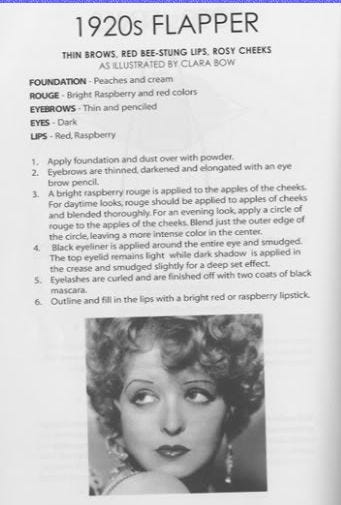
In 2022, Mahsa Amini was arrested for wearing her hijab wrong. She died from injuries that occurred when she was detained (skull fractures and severe head injuries). Official reports state that she died from a stroke or sudden heart attack, but given that she was twenty-two at the time of her arrest, believing the official account requires some credulity. At the time of her death, protests erupted, with more than 500 deaths, and 20,000 arrests. Many women cut their hair and burned scarves to show their outrage.
We’re told that the Iranian protests that began in December of 2025 started over terrible economic conditions and hyperinflation. Women are smoking on the streets of Tehran as an act of defiance. It’s been nearly 100 years since Edward Bernays got women smoking. Now these Torches of Freedom are setting fire to pictures of Iran’s Supreme Leader Ayatollah Ali Khamenei. No doubt there’s plenty that is protest-worthy, but it feels staged, nonetheless.

Ronald Lauder has repeatedly called Iran the ‘world’s leading state sponsor of terrorism’ and fears what could happen if they are allowed to develop nuclear weaponry. In his official capacity as head of the World Jewish Congress he stated, “My thoughts are with the people of Iran who are protesting a brutal and repressive regime. May all those who have taken to the streets remain safe.”
Lauder has been the driving force behind the idea of the United States acquiring Greenland. Since planting the idea in 2018 (‘strategic’, ‘rare earth minerals for AI’) he has begun investing there through Greenland Development Partners. Per https://www.arctictoday.com/ “Lauder is a participant in Greenland Development Partners, a Delaware-registered investor consortium that has bought into Greenland Investment Group — a company with ambitions that stretch well beyond consumer products.
Greenland Investment Group has expressed interest in bidding for a major hydropower project at Lake Tasersiaq, Greenland’s largest lake. The project is envisioned as the energy source for a future aluminum smelter and, according to company projections, could markedly increase the island’s export revenues and boost the territory’s public finances.
The company is chaired by Josette Sheeran, the former U.S. deputy secretary of state under Condoleezza Rice (Aspen Institute) and former head of the UN World Food Programme.”
Check out Josette Sheeran. She’s a piece of work. UN, WEF, CFR, Haiti relief. But, she applies her makeup with a light touch. Neutral colors, a soft palette. Her rouge is Icelandic Saga, her eyeshadow is Inuit, her lipstick is Ultima Thule.
Trump ally who inspired Greenland purchase idea quietly invests in Greenlandic companies
WOW....things that make you go MMMHHH🤔 THANK you Melissa for this DEEP, DEEP DIVE into 'WAR PAINT/MAKE-UP/WORLD CONQUEST' and giving us a glimpse into the world players. Makes one REALLY wonder WHO these women's parents/hubbies really were in order for them to be such PIVITOL world players, oh sorry, painters😉
Quite the deep dive. Here’s a war-paint related article from yesterday about a football player that was fined for writing “stop the genocide” in the black strips under his eyes last week in a playoff game:
https://www.espn.com/nfl/story/_/id/47651109/source-azeez-al-shaair-fined-stop-genocide-eye-black
Also, about the Aspen Institute, could be just a coincidence, but it’s kind of notable that it has such a close proximity to the military base carved into Cheyenne Mountain in Colorado that was originally known as “Ent Air Force Base.”
“In its mirror mass culture is always the fairest in all the land.” Theodore Adorno